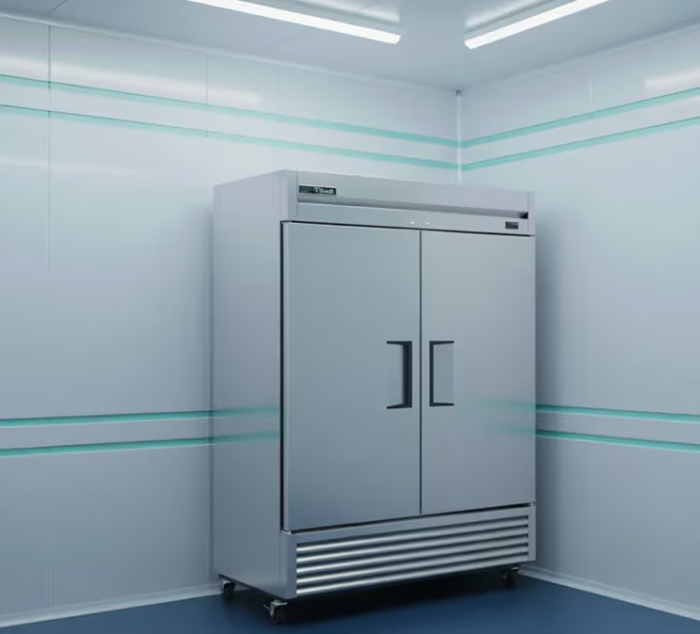
Built-in commercial refrigerators operate in tight cabinet spaces and are often used more intensively than household models, so their maintenance requirements are higher.
Regular preventative maintenance reduces the risk of downtime, food spoilage, and costly repairs.

Proper maintenance of https://www.coldcommercial.com/services/reach-in-commercial-refrigerators includes temperature monitoring, cleanliness of components, inspection of seals and ventilation, and adherence to loading regulations. Below are practical recommendations to help maintain stable operation and extend the life of the equipment.
Daily Checklist: Temperature, Indicators, Abnormal Noises, Vibrations
A daily check takes just a few minutes, but allows you to promptly detect any abnormalities in the operation of your built-in commercial refrigerator and prevent food spoilage and simple and costly repairs.
Record the results in a log (paper or electronic): this makes it easier to track progress and more quickly prove compliance with storage conditions during inspections.
What to check every day
- Temperature
- Compare the display readings with a control thermometer inside the chamber (preferably in the center, away from the evaporator and door).
- Check that the temperature is within the required range for the specific product group.
- Note the frequency and duration of door openings: sudden changes are often related to staff work schedules, not a malfunction.
- If the temperature rises: check that the door is closed tightly, that the shelves are overloaded, that the air ducts are blocked, that there is no ice buildup, and that the ventilation grilles are clean.
- Controller indicators and messages
- Make sure there are no active alarms/warnings (high/low temperature, sensor error, fan malfunction, open door).
- Check that the time and modes are correct (cooling/defrosting), setpoints, and locks.
- If warnings occur repeatedly, record the error code and time of occurrence, and provide the data to service.
- Extraneous Noises
- Listen to the compressor and fans: grinding, whistling, knocking, or periodic “banging” noises are a reason to diagnose.
- Check whether the fan is touching ice, wiring, or the casing, and whether the shelves and rear panel are rattling.
- Specifically, note noise that occurs only when the door is closed: this could indicate a deformed seal or a warped door.
- Vibrations
- Assess the vibration of the cabinet and furniture: increased vibration often indicates loose fasteners, improper installation, or worn supports.
- Check the stability of the unit and the absence of contact with communications and furniture elements.
- If vibrations are accompanied by a temperature increase or cyclical shutdowns, problems with the compressor, fan, or condenser may be present.
Bottom line: A daily checklist for temperature, indicators, noise, and vibration helps identify problems early, maintain stable storage conditions, and reduce the risk of unplanned equipment shutdowns.